
Introduction
Energy costs are one of the biggest operating expenses for businesses today. Whether you own a manufacturing unit, warehouse, office building, retail store, hotel, hospital, or educational institution, electricity bills continue to rise every year. At the same time, customers, investors, and governments expect companies to reduce their environmental impact.
This is where solar energy for companies becomes a smart investment rather than just an environmental initiative. Modern commercial solar systems help businesses generate their own electricity, reduce dependence on the power grid, improve long-term financial performance, and strengthen their sustainability goals.
Companies across the world are switching to solar energy because it provides measurable financial savings while supporting cleaner energy production. With continuous improvements in solar technology, installation costs have become more affordable, making commercial solar systems accessible to businesses of all sizes.
In this guide, you’ll learn everything about solar energy for companies, including its benefits, costs, installation process, return on investment, common misconceptions, and why it has become one of the smartest long-term business decisions.
What Is Solar Energy for Companies?
Solar energy for companies refers to the use of commercial solar power systems that convert sunlight into electricity using photovoltaic (PV) panels. These systems can be installed on:
- Office rooftops
- Factory buildings
- Warehouses
- Shopping malls
- Hospitals
- Schools
- Parking structures
- Open commercial land
The electricity generated can power daily business operations, reducing the amount of electricity purchased from utility companies.
Some businesses also use battery storage systems to store excess energy for use during evenings or power outages.
Why Are Companies Switching to Solar Energy?
There are several reasons businesses are investing in commercial solar systems.
1. Lower Electricity Bills
Electricity expenses continue to increase in many countries. Solar panels generate free electricity from sunlight, significantly reducing monthly utility costs.
Many businesses recover their investment within a few years and continue enjoying lower energy costs for decades.
2. Long-Term Cost Savings
Unlike traditional electricity, sunlight is free.
After installation, maintenance costs remain relatively low, allowing businesses to enjoy stable energy costs while protecting themselves from rising electricity prices.
3. Environmental Responsibility
Customers increasingly prefer companies that actively reduce their carbon footprint.
Using solar energy demonstrates environmental leadership and supports corporate sustainability goals.
4. Better Brand Reputation
Businesses that adopt renewable energy often build stronger relationships with customers, investors, employees, and partners.
Solar-powered companies are frequently viewed as innovative, responsible, and forward-thinking organizations.
5. Energy Independence
Generating electricity on-site reduces dependence on the public electricity grid.
This provides greater stability during periods of rising energy prices or supply disruptions.
Benefits of Solar Energy for Companies
Commercial solar systems provide numerous advantages beyond reducing electricity bills.
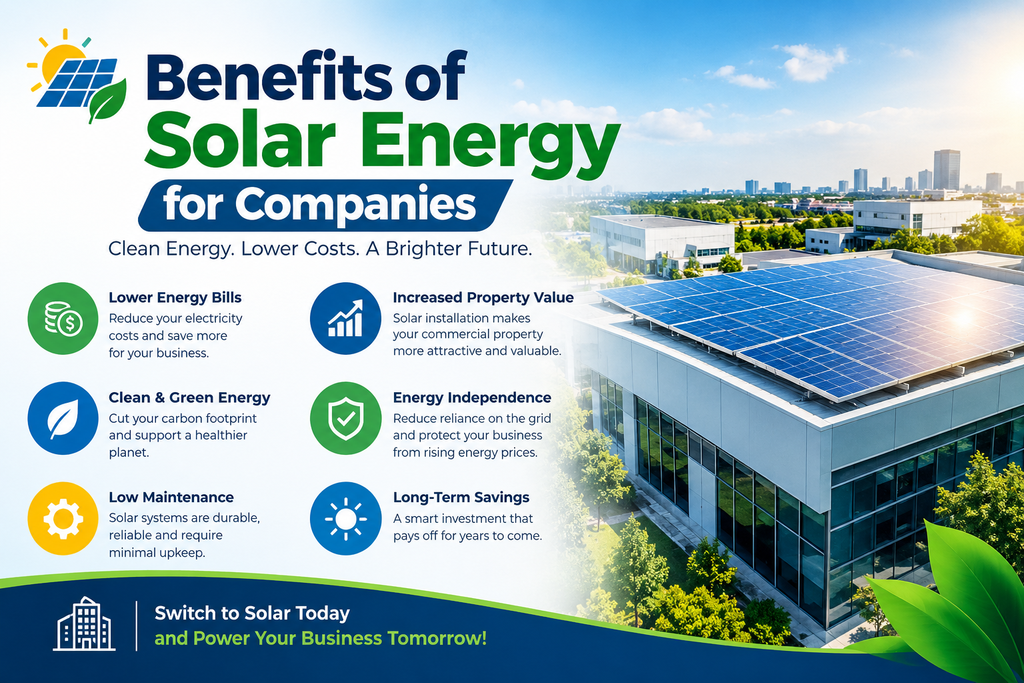
Significant Cost Reduction
Many businesses reduce electricity expenses by 40% to 90%, depending on system size and energy consumption.
This directly improves profitability.
(ROI)
Commercial solar installations typically offer excellent long-term returns.
Since solar panels generally last 25 years or more, businesses continue generating savings long after recovering installation costs.
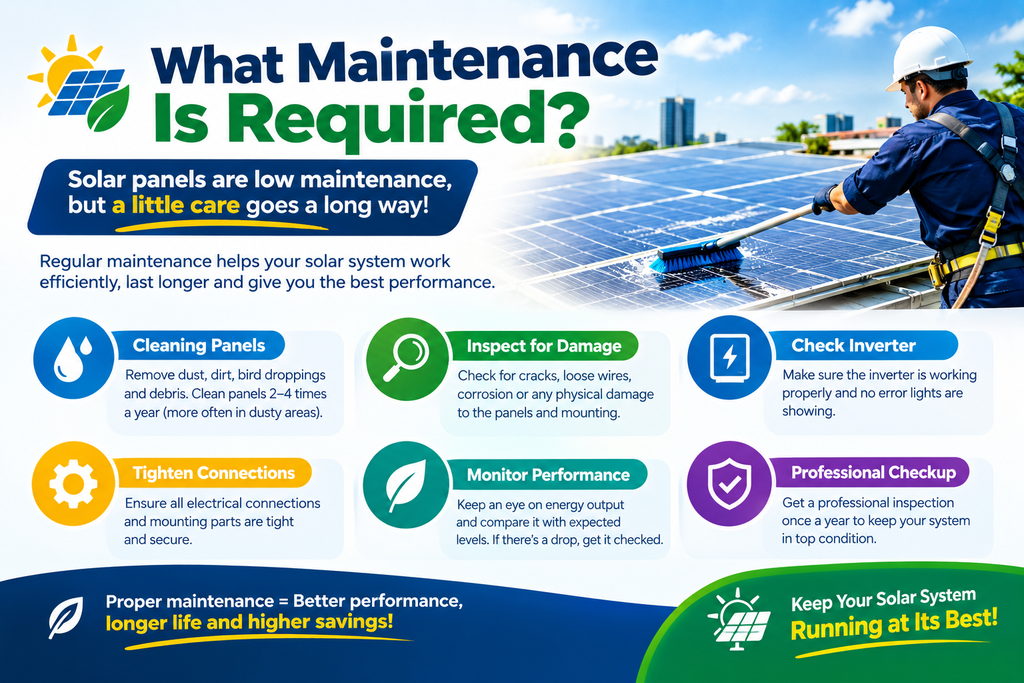
Low Maintenance
Solar panels have very few moving parts.
Routine inspections and occasional cleaning are usually enough to keep systems operating efficiently.
Increased Property Value
Commercial properties equipped with solar systems often become more attractive to buyers and investors.
Energy-efficient buildings generally have higher market value.
Tax Benefits and Incentives
Many governments offer incentives such as:
- Tax credits
- Rebates
- Accelerated depreciation
- Renewable energy grants
These programs reduce overall installation costs.
Reduced Carbon Emissions
Solar energy produces clean electricity without generating greenhouse gases during operation.
Companies can significantly lower their environmental impact while supporting global sustainability efforts.
Which Businesses Can Benefit from Solar Energy?
Almost every commercial organization can benefit from solar power.
Examples include:
- Manufacturing companies
- Corporate offices
- Retail stores
- Shopping centers
- Hotels
- Restaurants
- Hospitals
- Universities
- Schools
- Warehouses
- Agricultural businesses
- Logistics companies
- Data centers
If a business consumes electricity during daylight hours, solar energy can provide substantial savings.
How Does Commercial Solar Energy Work?
A commercial solar system operates through several components.
Solar Panels
Panels capture sunlight and convert it into direct current (DC) electricity.
Inverter
The inverter converts DC electricity into alternating current (AC), which powers commercial equipment.
Electrical Distribution
Generated electricity is supplied to office equipment, lighting, machinery, air conditioning, and other business operations.
Net Metering
If more electricity is generated than consumed, surplus power may be exported back to the electricity grid, depending on local regulations.
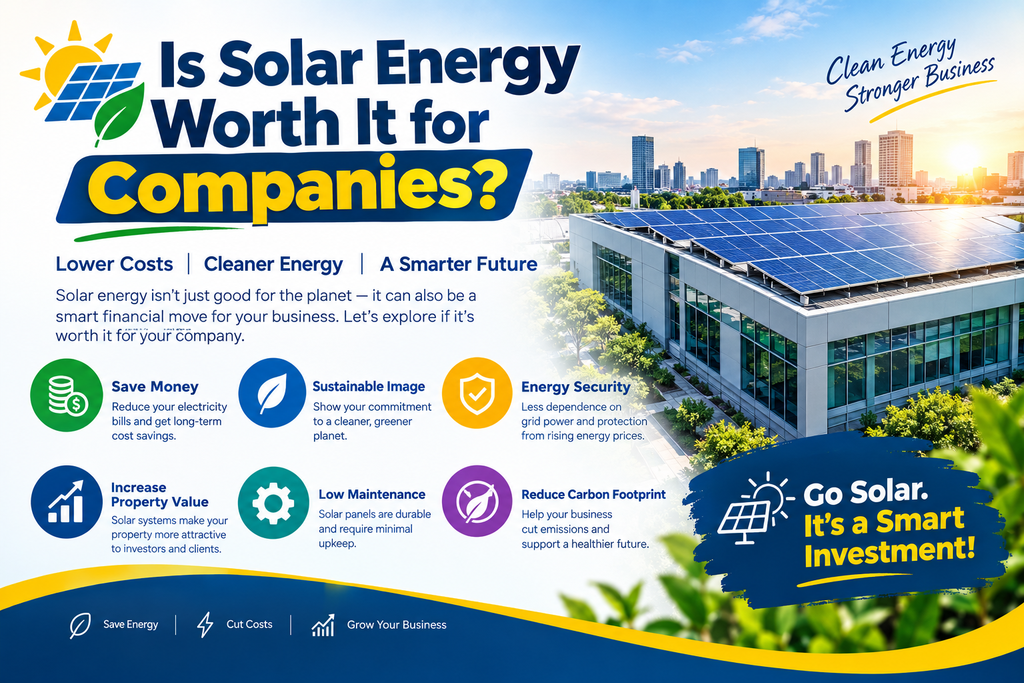
Is Solar Energy Worth It for Companies?
For most businesses, the answer is yes.
Companies with consistent daytime electricity usage typically achieve the greatest financial benefits.
The longer a company plans to operate from its current location, the greater the return on investment.
Solar energy transforms electricity from a recurring monthly expense into a long-term asset.
Factors That Affect Commercial Solar Costs
Several variables influence installation costs.
System Size
Larger businesses require larger solar systems.
Electricity Consumption
Companies with higher electricity usage generally install larger systems.
Roof Size
Available roof space determines how many panels can be installed.
Panel Quality
Premium solar panels often provide higher efficiency and longer warranties.
Battery Storage
Adding batteries increases installation costs but improves energy independence.
How Long Do Commercial Solar Panels Last?
Modern commercial solar panels are designed to last over 25 years.
Most manufacturers provide performance warranties of 20 to 30 years.
Inverters may require replacement after approximately 10–15 years depending on usage.
Common Myths About Solar Energy
Myth 1: Solar Doesn’t Work on Cloudy Days
Solar panels continue generating electricity even under cloudy conditions.
Production simply decreases compared to sunny weather.
Myth 2: Solar Is Too Expensive
Installation costs have fallen dramatically over the past decade.
Combined with financial incentives, commercial solar is now more affordable than ever.
Myth 3: Solar Requires Constant Maintenance
Commercial solar systems require minimal maintenance.
Occasional cleaning and periodic inspections are generally sufficient.
Myth 4: Solar Only Works in Hot Climates
Solar panels generate electricity from sunlight—not heat.
They operate effectively in many different climates.
Steps to Install Solar Energy for Companies
Installing commercial solar typically involves these steps:
- Energy consumption assessment
- Site inspection
- Solar system design
- Financial analysis
- Permit approvals
- Equipment installation
- Electrical testing
- Utility connection
- System monitoring
Professional installers ensure the system complies with safety regulations and local building codes.
How to Choose the Right Solar Company
Selecting the right installer is essential.
Look for companies that offer:
- Proven commercial experience
- Licensed engineers
- High-quality solar panels
- Reliable inverters
- Strong warranties
- Transparent pricing
- Positive customer reviews
- Ongoing maintenance support
Request multiple quotes before making a final decision.
Solar Energy and Corporate Sustainability
Environmental, Social, and Governance (ESG) initiatives have become increasingly important.
Solar energy helps businesses:
- Reduce greenhouse gas emissions
- Improve sustainability reporting
- Meet environmental targets
- Attract environmentally conscious customers
- Appeal to responsible investors
Many large organizations now include renewable energy adoption as part of their long-term business strategy.
(FAQs)
Is solar energy suitable for small businesses?
Yes. Small businesses can install systems based on their electricity usage and available roof space.
How much can companies save with solar energy?
Savings vary depending on location, electricity rates, and system size, but many businesses reduce electricity costs by 40–90%.
How long does installation take?
Most commercial projects are completed within several weeks, although larger systems may require additional time.
Can solar panels power an entire business?
Yes. Many companies generate most or all of their electricity through properly designed solar systems.
Do solar panels work during power outages?
Standard grid-connected systems usually shut down during outages for safety reasons. Battery storage or backup systems can provide electricity during blackouts.
What maintenance is required?
Regular cleaning, periodic inspections, and monitoring system performance are generally sufficient.
Future of Solar Energy for Companies
The future of commercial solar looks promising.
Advancements in battery storage, artificial intelligence, smart energy management, and high-efficiency solar panels are making commercial systems more productive and cost-effective.
Businesses that invest today are positioning themselves for lower operating costs, improved competitiveness, and greater energy resilience in the years ahead.
Conclusion
Solar energy for companies is more than just an environmentally friendly choice—it is a strategic business investment. By reducing electricity costs, improving energy independence, enhancing brand reputation, and supporting sustainability goals, commercial solar systems deliver value for businesses of every size.
Whether you operate a small office or a large manufacturing facility, investing in solar energy can provide decades of financial savings while helping your company contribute to a cleaner future. As technology continues to improve and renewable energy becomes increasingly accessible, now is an excellent time for businesses to evaluate commercial solar solutions and build a more sustainable, profitable future.